
About the Collaboration
We’re excited to launch our eighth collaboration with David Brook, a resident of the remote outback community of Birdsville, in Western Queensland and our Chairman.
OBE Organic is proud to be Australia’s oldest and most trusted organic beef marketing company: a company established and owned by family farmers. Our family farmers are united by a shared respect for the environment and their animals, and a commitment to produce the best possible organic beef. Our business was founded in the late 1990’s in Australia’s heartland, the Channel Country and we are committed to showcasing the places and people who make our certified organic beef so unique.
About David Brook
David is a founding Director, a shareholder and the Chairman of the OBE Organic group. David and his wife Nell own and operate 30,000 square kilometres (3 million hectares) of certified organic farms in the pristine Channel Country grasslands region of central Australia. Together, they’re proud to have raised six children on their farming properties.
David was born and raised in the iconic Australian outback desert town of Birdsville (population 100 people) and continues to live there to this day. His maternal great grandparents were married in Birdsville in the late 1880s, and his father Bill Brook purchased their first property, Adria Downs Station, in 1939. In addition to his organic farming operations, David is co-owner of the Innamincka Hotel. Regardless of the remote location of David’s properties and investments, he is exceptionally widely travelled and takes an active and energetic role in the management and fortunes of OBE Organic around the world.
The vast scale of David and Nell’s business enterprise is enhanced by their operation of an aircraft, a Cessna 210. Both hold private pilots’ licenses, with David having logged over 12,000 hours as a senior pilot.
In 2002 David received one of the nation’s highest civilian honours, the Medal of the Order of Australia (OAM) for his contribution to the community, local government and the establishment of organic agricultural production. In his spare time, David enjoys his passion for breeding and racing thoroughbred racehorses. Watch this video to learn more about David’s passion for OBE Organic & racehorses!

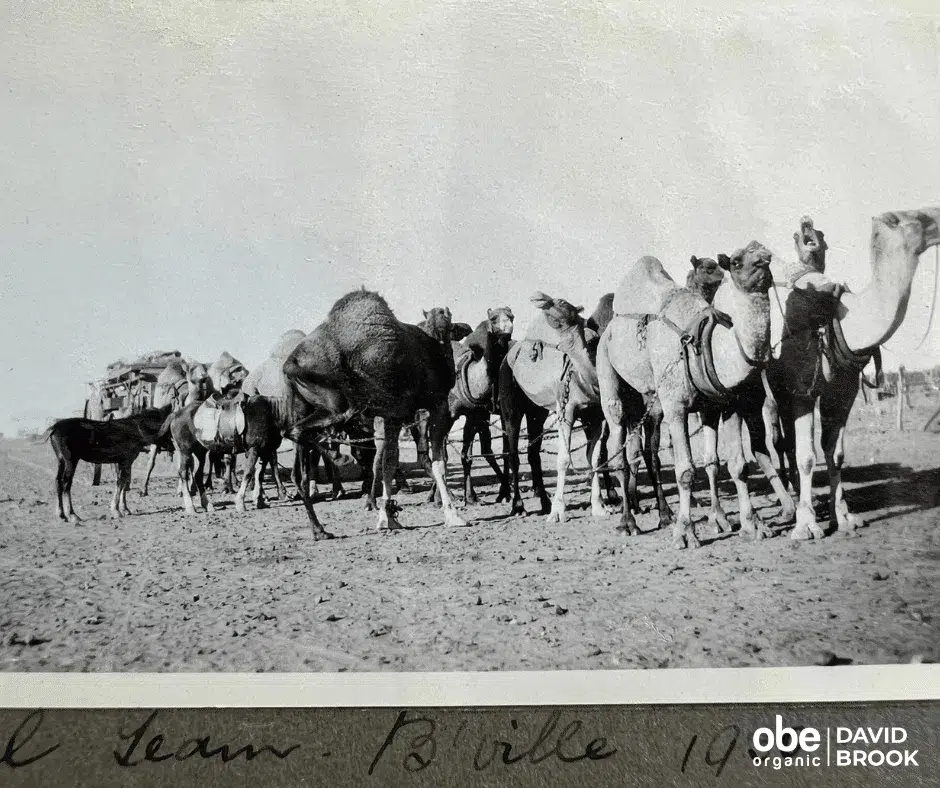
Afghan cameleers arrived in Maree in the 1860s, using camel teams to move goods across the deserts. Before trucks, they supplied Birdsville via the legendary Birdsville Track, once an Aboriginal trading path, explorer route, and cattle stock road.
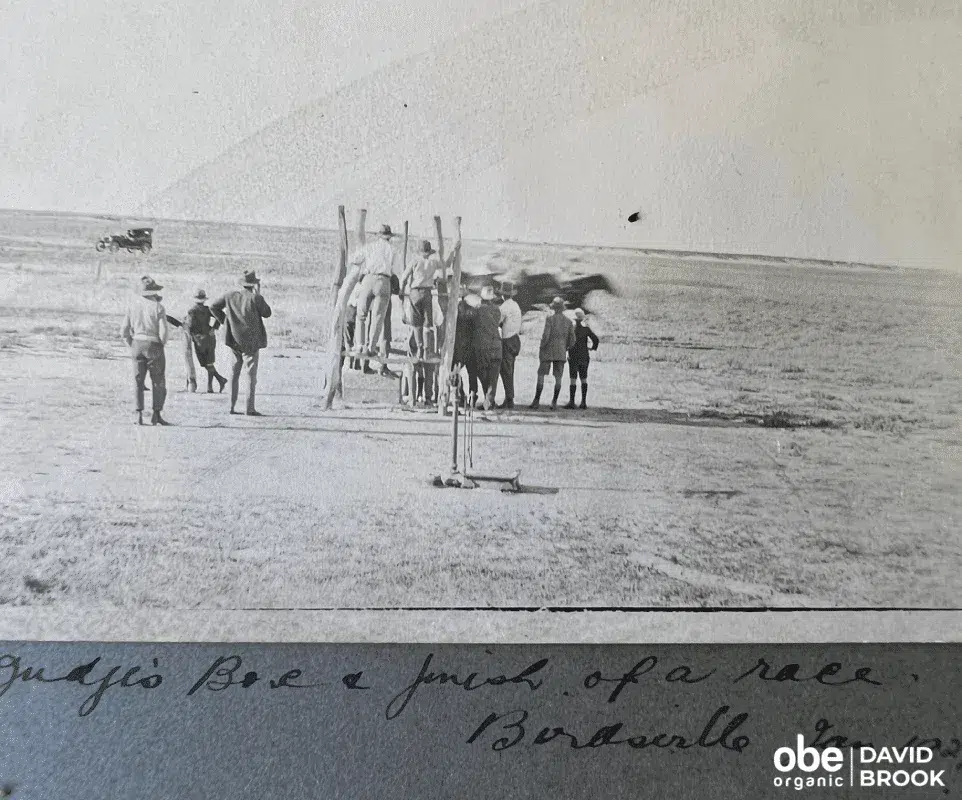
The first Birdsville Races were held in 1882 on a simple straight track marked with posts, starting by flag or cable before a crowd of 150. By the 1930s, the track shifted to its current site, now home to races that draw nearly 6,000 spectators.
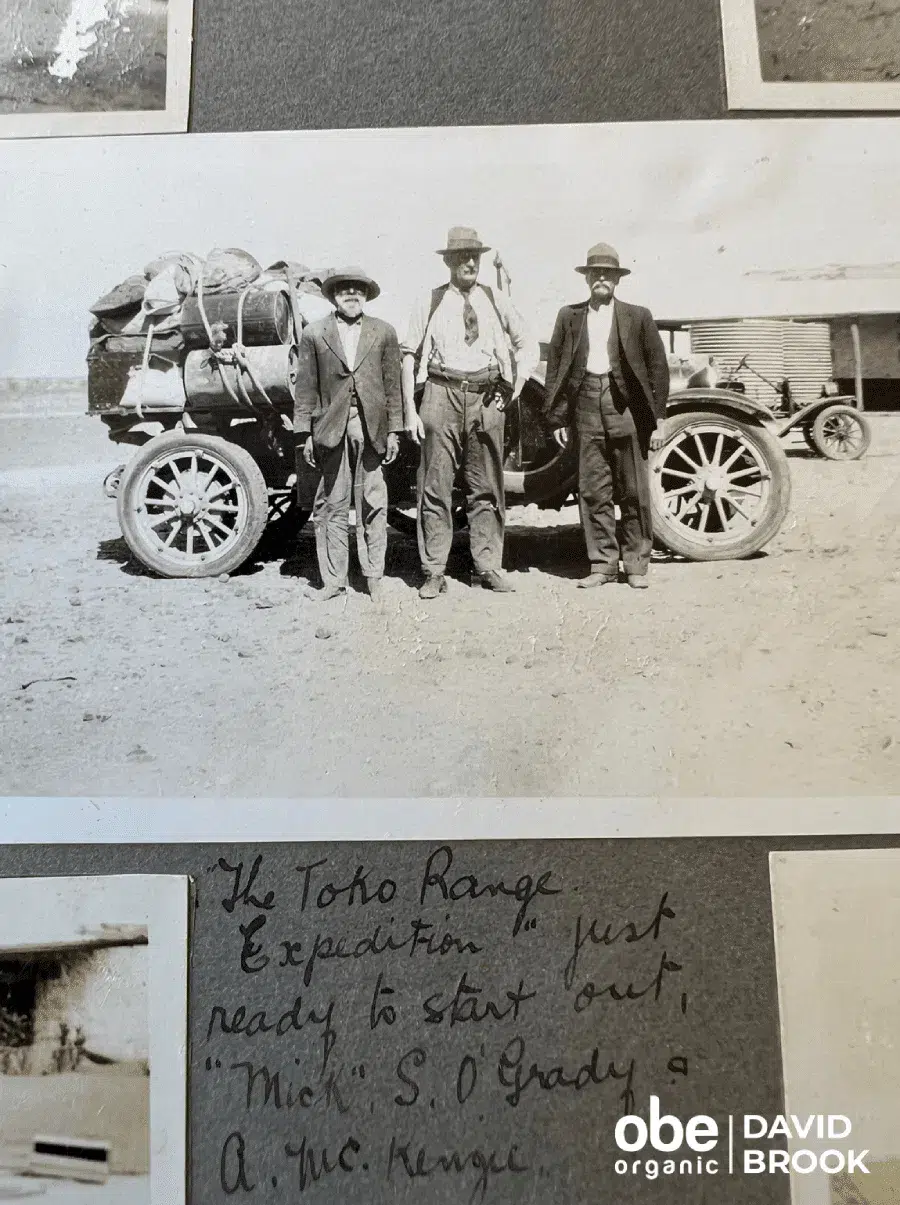
This image shows Mick with S. O’Grady and A. McKengee preparing for the Toko Range Expedition. Mick may have been either Mick from Mungerannie, a Yandruwandha man born at Murnpeowie in 1885, or Pandie Mick, born near Alton Downs in 1880. The Toko Range itself is linked to Aboriginal travelling ceremonies, including the well-documented Mulunga corroboree.
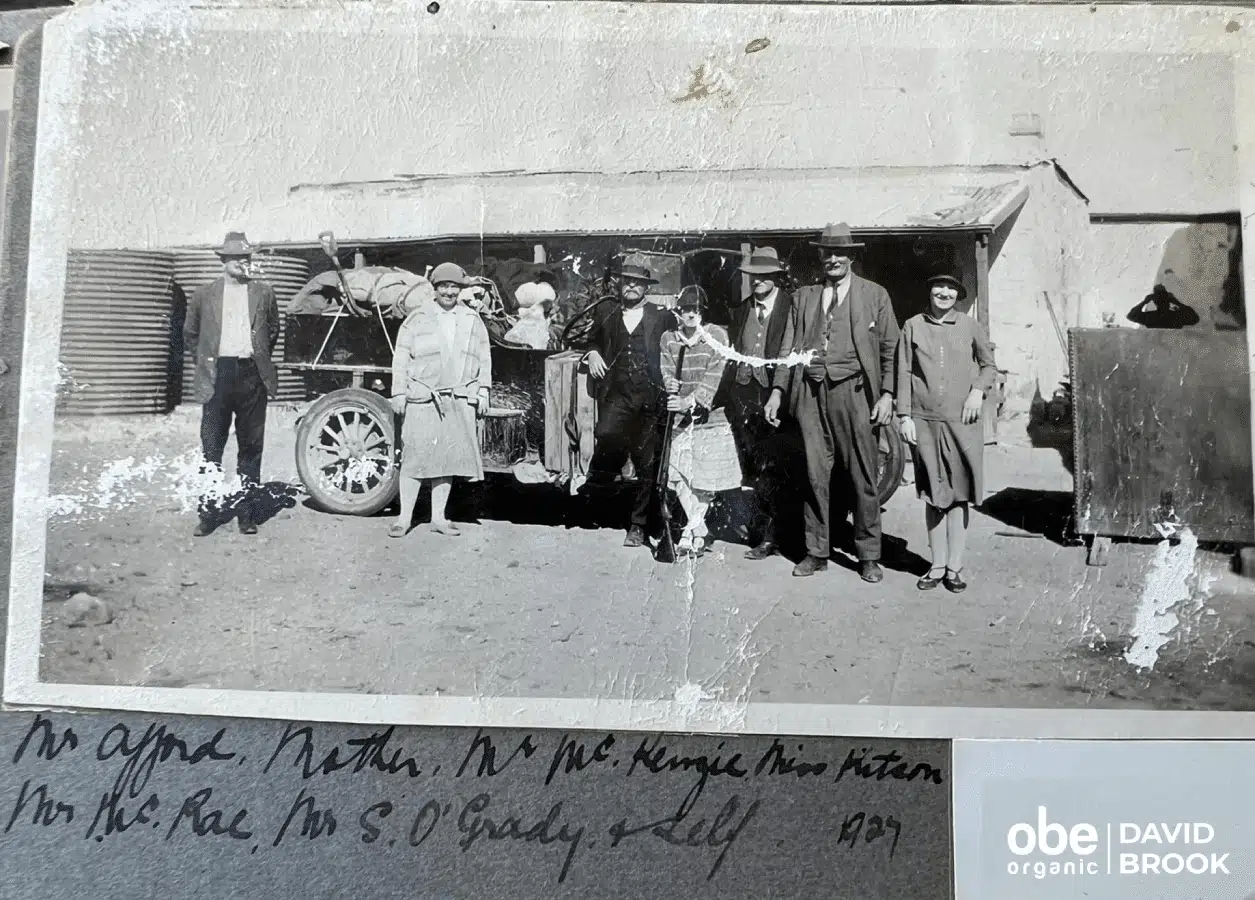
According to David, this photo features Mr Afford, his mother, Mr McKenzie, Miss Kitern, Mr McRae, and Mr S. O’Grady in 1927. Harry Afford, born in 1875, lived in Birdsville until 1959 and was remembered for helping travellers, including repairing George Hooper’s car after a breakdown on the Marree Track in 1933.
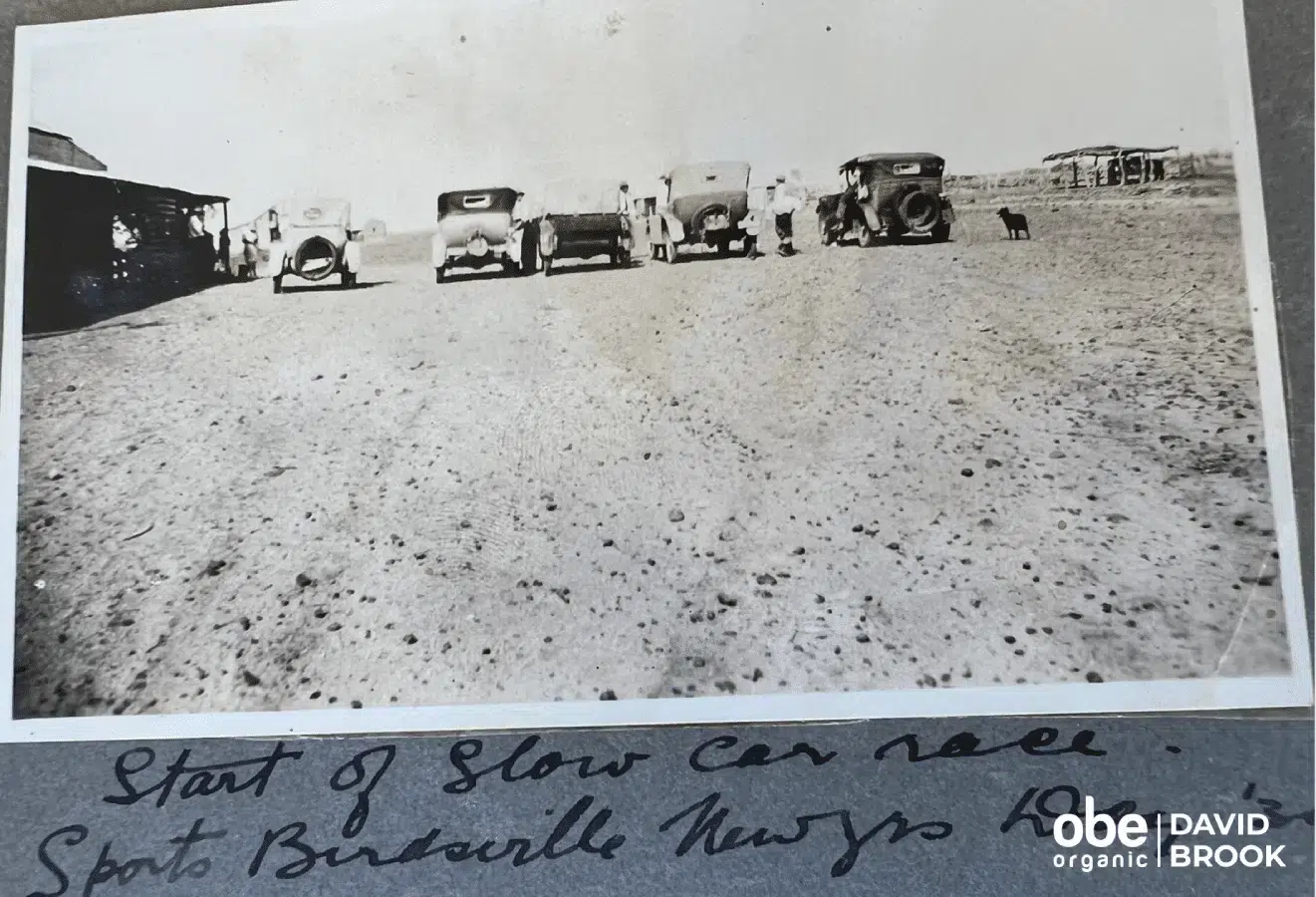
This photo captures the start of the slow car race in Birdsville on New Year’s Day, 1930. Remarkably, both landmarks shown, the Birdsville Hotel and the old general store, now painted yellow, still stand today, more than 90 years later.

This photo shows a group outside Pandy Homestead in 1928, including members of the Crabb, Reese, and Gaffney families. Among them was Alfred McRae, born in 1862, who passed away later that year and is buried in the Birdsville cemetery.
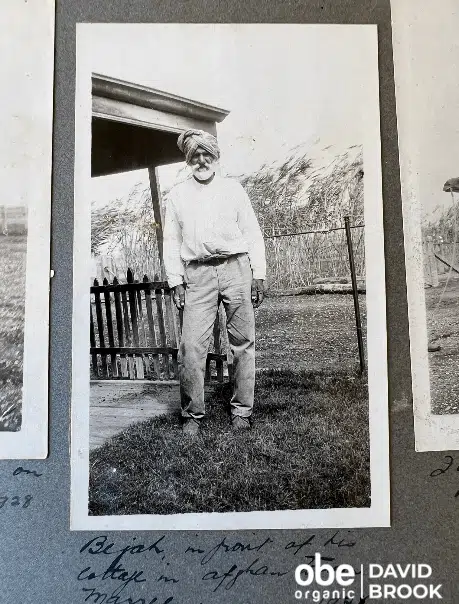
Afghan cameleers played a vital role in outback Australia from the 1860s to the 1930s, breeding camels and running rest stations across the interior. Before motor vehicles, they connected remote grazing stations with coastal cities and supported exploration, settlement, and communication in the harsh desert climate.
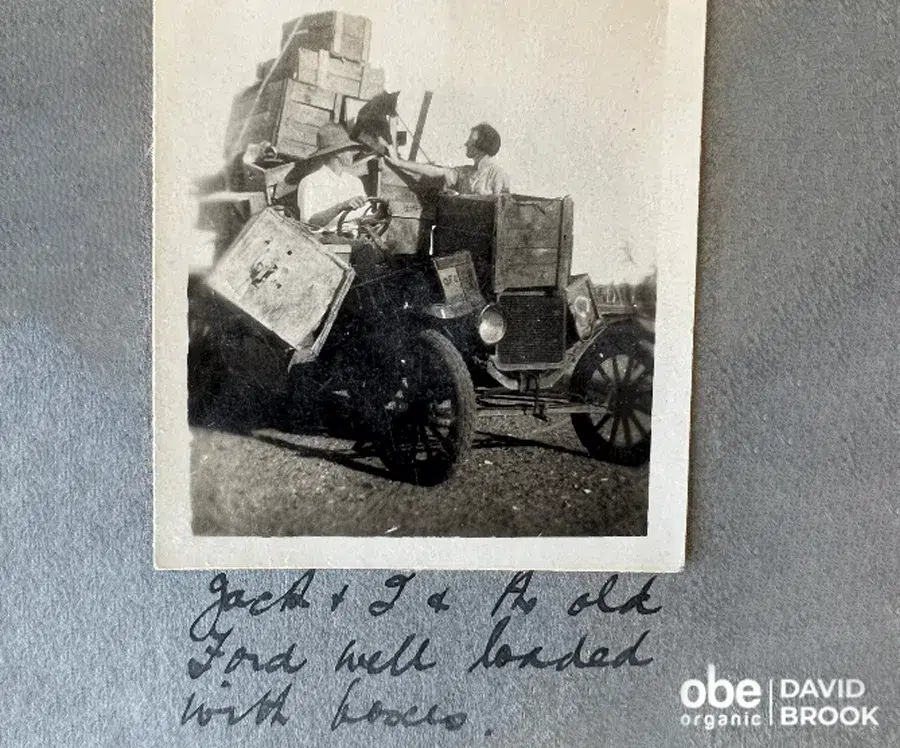
Taken nearly a century ago, this photo shows David’s mother and her brother Jack preparing for a journey in their Ford, piled high with boxes. While the exact details of where they were headed are unknown, the image captures the resourcefulness and resilience of outback travel in that era.
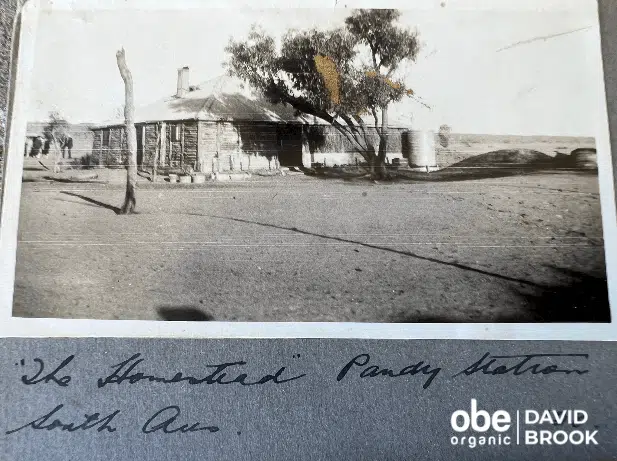
This photo, taken by David’s mother in 1928, shows Pandie Pandie Station, a pastoral lease along the Diamantina River in South Australia’s Channel Country. Established in 1876 by Robert Frew, who also renamed Diamantina Crossing to Birdsville, it later passed to Sidney Kidman and then the Morton family, who owned it for 70 years until 2008.
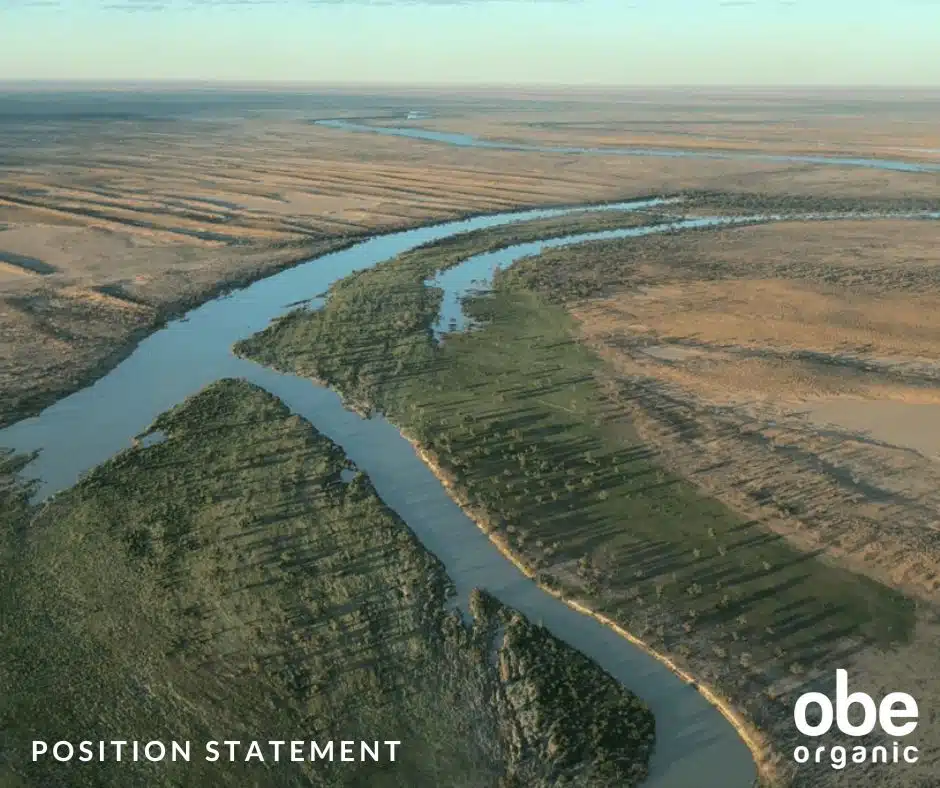
OBE Organic values the Lake Eyre Basin as a vital environmental and cultural landscape, with rivers that must remain free-flowing. The Mulligan River, shown here, is part of Queensland’s Channel Country and feeds into Kati Thanda–Lake Eyre during heavy rains.
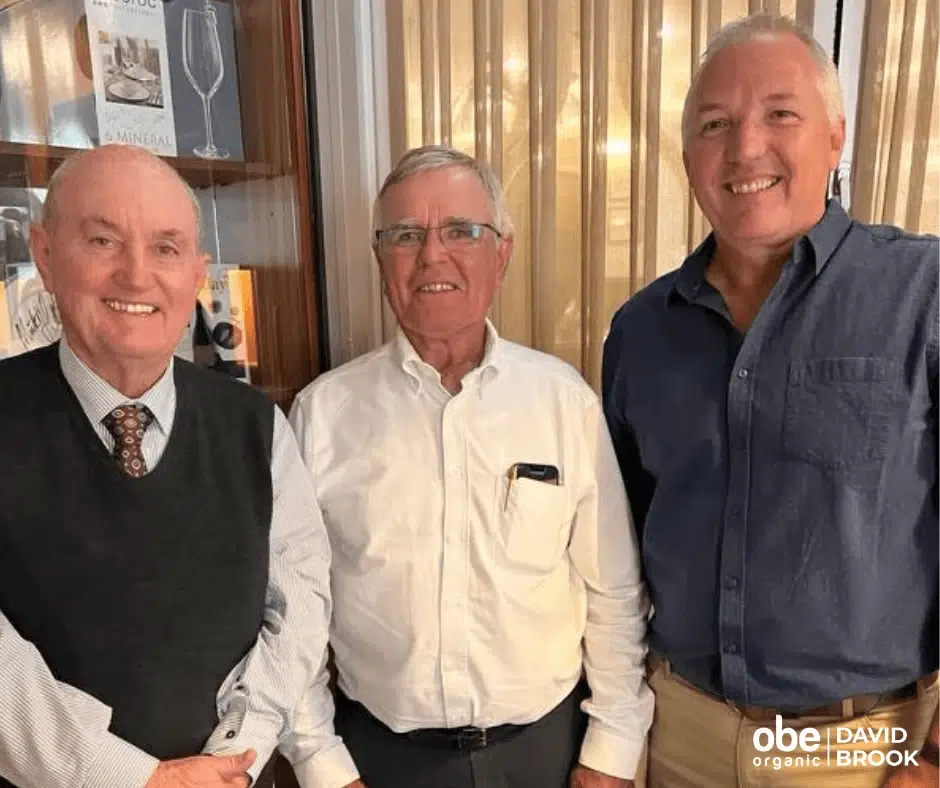
David served on the board of the Australian Stockman’s Hall of Fame in Longreach from 2002 to 2022, including 13 years as Chairman. Today, Peter Hughes holds the role of Chairman, supporting CEO Lloyd Mills in carrying forward the Hall’s mission to honour the pioneers and stockmen of outback Australia.
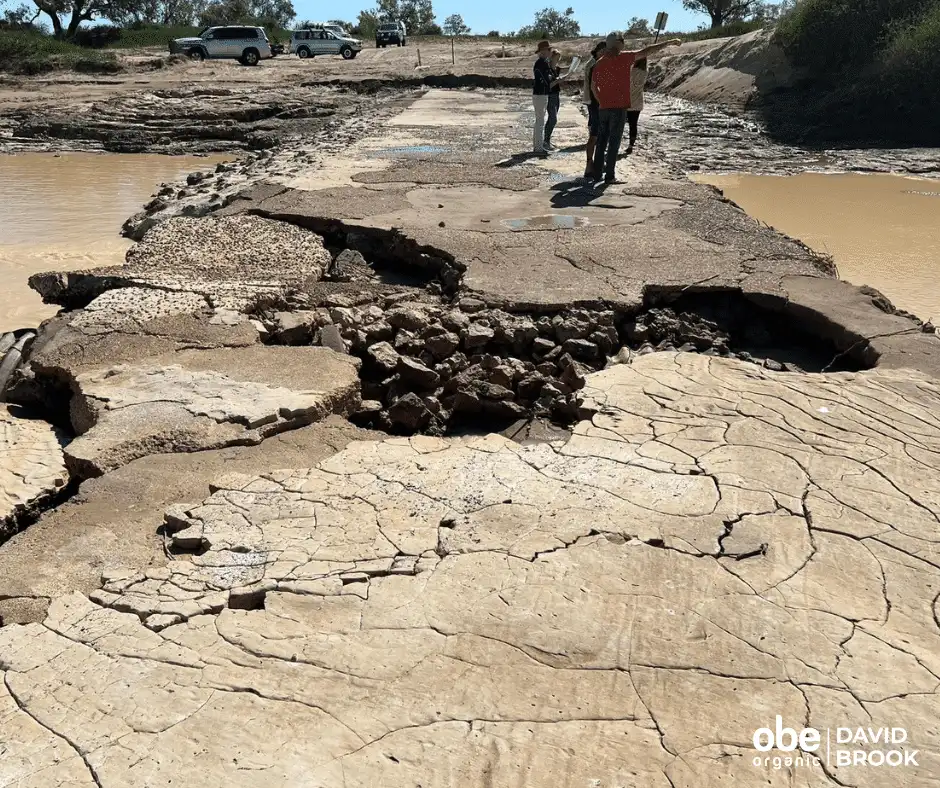
The Diamantina Crossing, a stone causeway across the river near Birdsville, was the only practical crossing point for hundreds of kilometres. From the 1860s it became vital for settlement and trade, shaping the Birdsville Track and the town itself, before a new bridge replaced it in the 1970s.